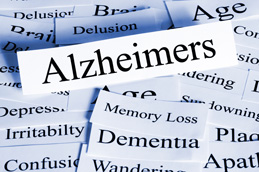
What is Alzheimer's?
Introduction
Alzheimer's (AHLZ-high-merz) is a disease of the brain that causes problems with memory, thinking and behavior. Alzheimer’s disease is not normal aging or a mental illness.
Is the most common form of dementia
Dementia is a general term for the loss of memory and other intellectual abilities serious enough to interfere with daily life. Alzheimer's accounts for an estimated 60 to 80 percent of dementia cases.
Is more common than you think
More than 5 million people in the United States are living with Alzheimer's. The number of Americans with Alzheimer’s disease and other dementias will grow each year as the proportion of the U.S. population that is over age 65 continues to increase.
With Alzheimer’s, it is not just those with the disease who are impacted. It’s also their caregivers. Caring for a person with Alzheimer’s is often very difficult, and many family or friend caregivers experience high levels of emotional stress and depression as a result.
Gets worse over time
Alzheimer's gets worse over time and ultimately is fatal. Although symptoms can vary widely, the first problem many people notice is forgetfulness severe enough to affect their ability to function at home or at work or to enjoy lifelong hobbies.
Other symptoms include confusion, getting lost in familiar places, misplacing things, and problems with speaking and writing.
Learn the 10 warning signs of Alzheimer's disease.
Next: Inside the Brain
Giới thiệu
Bệnh Alzheimer’s (AHLZ-high-merz) là một bệnh lý về não tác động đến trí nhớ, suy nghĩ và hành vi. Bệnh Alzheimer’s không phải là bệnh lão khoa thông thường hoặc bệnh thần kinh.
Là dạng phổ biến nhất của hội chứng suy giảm trí nhớ
Hội chứng suy giảm trí nhớ là thuật ngữ tổng quát về việc mất trí nhớ và các khả năng tư duy nghiêm trọng đến nỗi gây trở ngại cho cuộc sống thường ngày. Bệnh Alzheimer chiếm khoảng 60% đến 80% trong những bệnh làm suy giảm trí nhớ.
Phổ biến hơn bạn nghĩ
Hơn 5 triệu người Mỹ đang chung sống với bệnh Alzheimer’s. Số lượng người Mỹ mắc bệnh Alzheimer’s và các chứng suy giảm trí nhớ khác sẽ tăng lên mỗi năm khi tỉ lệ dân số Mỹ ở độ tuổi trên 65 tiếp tục gia tăng.
Với bệnh Alzheimer’s, không chỉ người bệnh mà cả người chăm sóc người bệnh cũng bị ảnh hưởng. Chăm sóc người bệnh Alzheimer’s thường rất khó khăn, và nhiều gia đình hoặc bạn bè giúp trông nom người bệnh đã phải trải qua những cảm xúc vô cùng căng thẳng và dẫn đến trầm cảm.
Trầm trọng hơn theo thời gian
Bệnh Alzheimer’s trầm trọng hơn theo thời gian và cuối cùng gây tử vong. Mặc dù các triệu chứng có thể rất khác nhau, nhưng vấn đề đầu tiên mà nhiều người nhận thấy là tính hay quên nghiêm trọng đến nỗi ảnh hưởng đến khả năng hoạc động của người bệnh khi họ ở nhà, tại nơi làm việc hay lúc tận hưởng sở thích riêng.
Những triệu chứng khác bao gồm lú lẫn, đi lạc ở những nơi quen thuộc, để đồ đạc không đúng chỗ và gặp khó khăn khi nói và viết.
Tìm hiểu 10 dấu hiệu cảnh báo của bệnh Alzheimer’s.
Tiếp theo: Bên trong não
|