The LatAm-FINGERS study shows lifestyle interventions adapted across Latin American cultures, health systems and communities can improve memory, thinking and overall cognitive function in older adults at risk for cognitive decline and dementia. See the LatAm-FINGERS study results.
Dementia has been declared a public health priority by the World Health Organization (WHO)[1, 2], which has also prioritized research into dementia prevention. Risk reduction and prevention are pivotal in managing the dementia epidemic globally, and the sharing of data is vital to informing this process. World Wide FINGERS facilitates the use of data from several countries, creating a unique opportunity for rapid knowledge dissemination and implementation.
ABOUT
The Finnish Geriatric Intervention Study to Prevent Cognitive Impairment and Disability (FINGER) trial is the first randomized controlled trial (RCT) showing that it is possible to prevent cognitive decline using a multidomain lifestyle intervention among older at-risk individuals. The results from this trial led by Professor Miia Kivipelto and team highlighted the value of addressing multiple dementia risk factors as a strategy to protect brain health, promote overall health and functioning, and reduce the risk of developing new chronic diseases [3,4,5].
Prevention of cognitive impairment requires integrated approaches targeting risk factors shared by chronic disorders common in older age. This is the definition of accessible and sustainable strategies for populations within different geographical, economic and cultural settings.
WW-FINGERS was established to support and convene global multidomain dementia prevention trials, share experiences and data, and harmonize methods. Professor Kivipelto is the founder and scientific lead of the WW-FINGERS Network, which includes investigator teams from around the world.
Investigating teams will test the effects of multidomain lifestyle interventions, modeled after FINGER, on brain health and dementia prevention in diverse populations.
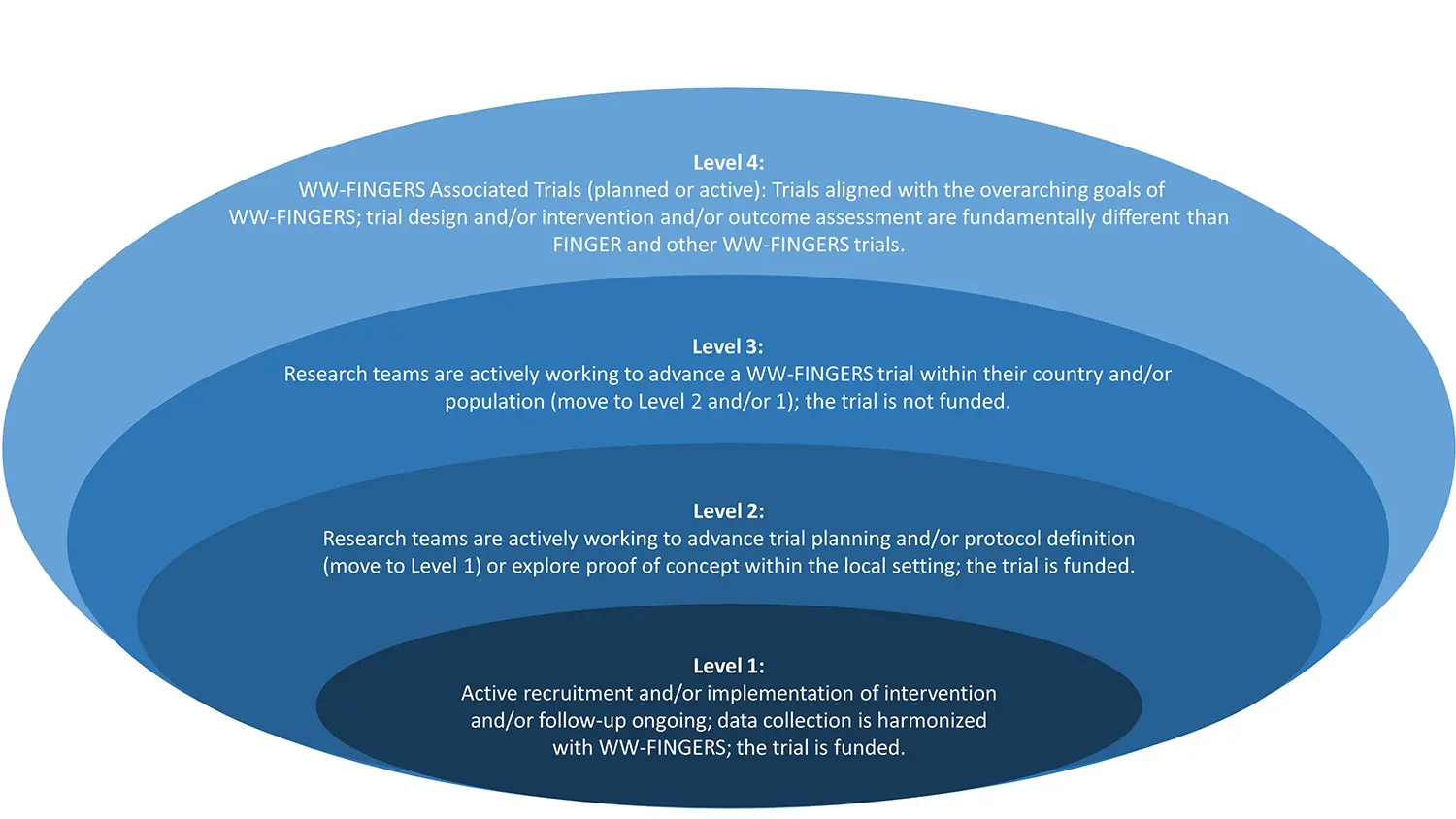
The WW-FINGERS Network comprises studies at different stages of implementation and with varying graduations of alignment to the FINGER trial. For instance, in the United States through the Alzheimer’s Association, the intervention and outcomes assessment of the U.S. POINTER study are harmonized with FINGER. To help classify and understand the status of the WW-FINGERS trials, the network has agreed on the definition of four main levels, which reflect the trials’ key features, including current status (e.g., from RCTs still in the planning stage to those in which follow up of participants is available); funding availability; and degree of alignment with the FINGER RCT, in terms of design, intervention being tested and assessment of cognitive outcomes (Figure 1). Each study in the WW-FINGERS Network can be assigned to a level, and mobility among levels is expected.
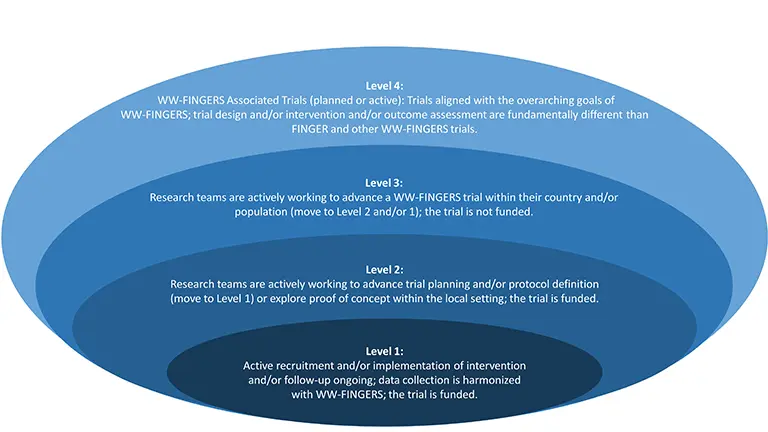
Figure 1
Network Contacts
Maria Carrillo
Alzheimer’s Association
Francesca Mangialasche
Karolinska Institutet
Miia Kivipelto
Karolinska Institutet, University of Eastern Finland and Imperial College London
Emily Meyers
Alzheimer’s Association
Heather Snyder
Alzheimer’s Association