

Make Twice the Impact This World Alzheimer’s Day
Make Twice the Impact This World Alzheimer’s Day
Double your impact during our World Alzheimer’s Day 2x Match Challenge. Your gift before midnight on Sept. 21 can go twice as far to accelerate research and help provide care and support for millions affected by Alzheimer’s.
Donate NowJonathan Pryce and Gary Oldman on the Evolving Portrayal of Dementia Onscreen
Award-winning actors Jonathan Pryce and Gary Oldman spoke with us about the evolving portrayal of dementia on television and the powerful impact of community, and how the Apple TV+ spy series "Slow Horses" is weaving cognitive decline into its storyline.
*The following contains spoilers related to Season 4 of "Slow Horses."
For actors, portraying someone living with dementia is not just a role — it's a responsibility. Jonathan Pryce understands this deeply. In "Slow Horses," he steps into the role of David Cartwright, an intelligence officer who in Season 4 begins grappling with cognitive decline. Through this portrayal, Pryce navigates not only the internal disintegration of memory and identity, but also the emotional impact on those around the character.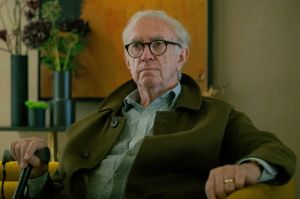
This is not new terrain for Pryce. On stage in Florian Zeller's "The Height of the Storm," he played a husband experiencing similar decline. What stayed with him most was the response from audiences after the curtain fell.
"I would meet people at the stage door, saying that they felt alone while caring for a parent, or that they'd given up work to move in with their parents," Pryce recalled. "Seeing this play and seeing this man on stage, was the first time they hadn't felt alone. They felt part of a community. I remember one guy telling me it was the first time he'd been able to cry. As an actor, it has a profound effect on you."
When done authentically, portrayals of dementia on screen can raise awareness of the real-life experiences of millions. Onscreen portrayals can create space for audiences to recognize their own struggles, perhaps for the first time. They can also prompt crucial conversations — especially about early intervention.
"The earlier you can get a diagnosis, the more help you can get," Pryce said. "I think watching 'Slow Horses,' and seeing characters depicted this way, might prompt someone to say, ‘Well, maybe I should do something about it myself.'"
As the storyline develops, even within the context of a larger-than-life, gritty genre, the series touches on difficult topics: safety issues like access to firearms, decisions around long-term care and the emotional toll of watching a loved one change. In one scene, Cartwright is moved into residential care by his grandson River (played by Jack Lowden), a moment that mirrors the difficult realities many families face. "Even I cried when I saw that scene again," said Pryce.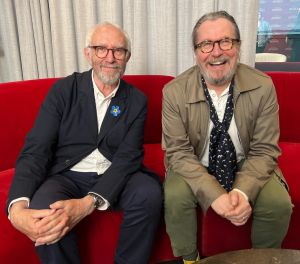
Reactions to Cartwright's decline by characters in the show are varied — some compassionate, others dismissive. Gary Oldman, who plays Jackson Lamb, noted Lamb's response reflects the complexity of his character and his relationship with Cartwright. "Deep down, there's someone who's quite damaged from the agency and from the line of work he's been doing," Oldman said.
"Lamb is a bit of a throwback. He's not sympathetic," Pryce added. "Thankfully, there's greater understanding of Alzheimer's and dementia today."
"There's certainly more awareness of it now, and when it does [get portrayed] it gets highlighted, like Jonathan's performance," Oldman agreed.
For actors like Pryce, portraying dementia means holding space for the stories of others — stories often marked by silence, exhaustion and resilience. These roles offer not just visibility, but connection.
"Slow Horses" is now streaming on Apple TV+.
Related articles: