
Double Your Impact Today
Double Your Impact Today
This is your moment to do more. Give by midnight on Sept. 10 and your gift can be matched — up to $25,000 — to fund research, protect brain health, and help provide care and support to those facing Alzheimer's disease.
Donate NowOU researcher receives grant to address home fall risks
A common health risk facing older adults is falls in the home. That risk rises for adults with Alzheimer’s, particularly when the individual lives in rural areas or relies on telehealth care. A University of Oklahoma researcher has received a grant from the Alzheimer’s Association to create practical tools that help clinicians identify fall risks earlier, while reducing barriers related to transportation, mobility and cognitive impairment.
A University of Oklahoma researcher is undertaking a study of one of the most common health risks facing older adults: falls that occur in the home.
An estimated 14 million Americans, or one in every four age 65 and older, falls every year, according to the U.S. Centers for Disease Control and Prevention (CDC). While that risk of falls increases as we age, it is estimated to be two to three times higher for those 70,500 Oklahomans among 7.4 million Americans living with Alzheimer’s disease.
And despite an increasing reliance on telehealth care, particularly in rural and remote areas, there are ongoing challenges in assessing the individual’s risk of falling in their everyday environment. The OU grant aims to provide caregivers with training and instructions to assist with this fall risk assessment process, and obtain their input to develop practical and user-friendly safety protocols.
The OU grant
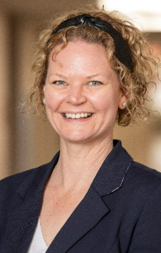 Dr. Tara Klinedinst, an occupational therapist, assistant professor and director of the Health-Promoting Activities Lab (Health-PAL) at University of Oklahoma’s Health Campus in Tulsa, is the recipient of a two-year grant from the Alzheimer’s Association for her research project to create an evidence-based fall risk assessment specifically adapted and evaluated for virtual delivery with the assistance of caregivers for people living with dementia.
“Falls are one of the most serious health threats facing older adults, and are especially dangerous for people living with Alzheimer’s disease and related dementias (ADRD),” said Dr. Klinedinst. “Cognitive changes associated with ADRD can affect balance, judgment, mobility and awareness of hazards.”
As telehealth becomes an increasingly important part of healthcare delivery, there is a growing gap where healthcare providers are not able to assess the fall risk in the home and provide guidance to family caregivers.
Dr. Klinedinst’s goal for the project is to create practical tools that help clinicians identify fall risk earlier, while reducing barriers related to transportation, mobility and cognitive impairment.
The OU team will use interviews and stakeholder feedback to refine assessment procedures, caregiver instructions, safety protocols and clinical workflows to ensure the approach they develop is practical, acceptable and user-friendly.
Can virtual assessments be completed safely and consistently
The OU team’s study, which is adapted from the CDC’s Stopping Elderly Accidents, Deaths, and Injuries (STEADI) framework, has the potential to significantly expand access to fall risk screening for a population that has historically been underserved by both traditional and virtual fall prevention programs, according to Dr. Klinedinst.
“By bringing assessment into the home and actively engaging caregivers, STEADI Connect could help clinicians identify fall risk earlier,” she said.
Expanding the fight against Alzheimer's
The funding of the OU research is one small part of the Alzheimer's Association effort to combat the sixth-leading cause of death – and the only leading disease without a cure – on every front.
Currently, the Alzheimer’s Association has over $490 million active in 1,220 projects in 59 countries on six continents. Recent advancements in research include the development of lifestyle guidance to help reduce our risk of developing Alzheimer's, blood tests to diagnose the disease earlier, and medications shown to slow the progression of the disease.
“Perhaps the greatest tragedy of this disease is that about half of those living with Alzheimer's are never diagnosed,” said Sandi Pellow, executive director of the Alzheimer's Association of Oklahoma. “With our country’s aging population, it is imperative that we educate people about the warning signs and risks of Alzheimer's so that, if warranted, they can seek an earlier diagnosis and take advantage of the great advances we’re seeing in Alzheimer’s treatment.”
The size of the challenge
If successful, Dr. Klinedinst’s research could positively affect an enormous population group.
- One in nine people in the U.S. (11%) age 65 and older has Alzheimer's disease
- By 2030, the segment of the U.S. population age 65 and older is projected to be 71 million - making up over 20% of the total population (vs. 17% in 2022)
- An estimated 11,400 Americans turn 65 every day
- 14 million (or 1 in 4) Americans age 65+ falls each year (per the CDC)
- Falling once doubles the risk of falling again
- Each year there are about 3 million emergency department visits for falls by older adults
- Falls are the most common cause of traumatic brain injuries