
Make Twice the Impact Right Now
Make Twice the Impact Right Now
Our Double the Hope Match Challenge is underway, but not for long. From now until Oct. 23, your gift can have double the impact on advancing research and brain health discoveries, as well as helping to provide care and support to those impacted by Alzheimer’s disease.
Donate NowFrom the Clinic to the Finish Line: One PA's Mission to Change the Alzheimer's Story
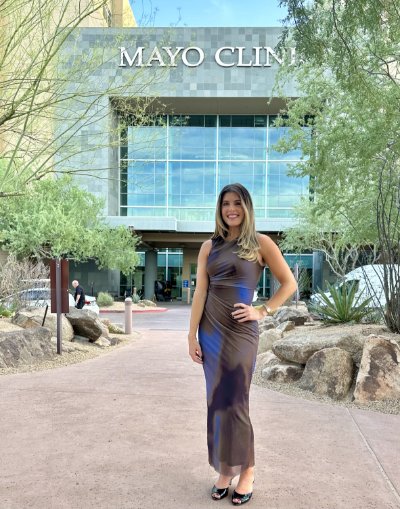
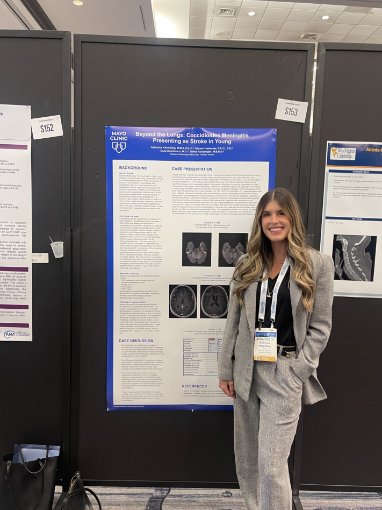
Katherine Kitzenberg spends her days doing something most people only encounter when a crisis hits close to home: helping families make sense of Alzheimer's disease. As a neurology physician assistant at Mayo Clinic Arizona and an instructor of neurology for PA programs across the country, she sits with patients and families at some of the hardest moments of their lives, the moment when memory loss and cognitive change stop being a worry in the back of someone's mind and become a diagnosis.
"Over my career, I have collected many loved 'ones' with this terrible disease," Katherine says, "seeing the impact it has firsthand, and I am honored that they trust me to support their journey."
Turning a Hard Process Into a Human One
Katherine hears the same story again and again from new patients: getting an accurate diagnosis took far too long, and the process was exhausting. She has built her practice around changing that experience. Her evaluations include a detailed history from both patient and family, a neurologic and cognitive exam, neuropsychological testing, and imaging, all working together to determine whether Alzheimer's, or another cause of cognitive impairment, is behind the symptoms. At Mayo Clinic, she and her team also draw on biomarkers and lab testing to sharpen that accuracy even further.
The Weight of What Medicine Can't Yet Do
Despite the progress being made in Alzheimer's research, Katherine is honest about the emotional toll of her work. "One of the biggest emotional challenges I face as a neurology PA caring for patients with Alzheimer's disease is knowing that despite tremendous advances in research and treatment, we still cannot (yet!) stop or cure the disease," she explains. Watching someone lose their memories and independence, piece by piece, while their family steps into the unfamiliar role of caregiver, is not something that gets easier with time.
Where the Hope Comes From
What keeps Katherine going is the same contrast that makes her work so hard: seeing devastating loss and meaningful progress side by side. Earlier diagnosis, emerging treatments, active research, and stronger support systems for families all point toward a future that looks different from today. "I want my patients to have access to the best care available today," she says, "while contributing in whatever way I can to a future where an Alzheimer's diagnosis is no longer devastating."
Running Toward a Cure
This November, Katherine will bring her commitment to a very different kind of finish line. She's running the 2026 TCS New York City Marathon as part of the Alzheimer's Association charity team, and she has already raised more than $6,700 to support Alzheimer's research, patient care, caregiver resources, and advocacy work.
"Running this marathon is a meaningful way for me to combine my passion for neurology with my love of distance running while helping advance the fight against this devastating disease," Katherine says.
For Katherine, the marathon and the clinic are two sides of the same mission: showing up, mile after mile and patient after patient, for a future where Alzheimer's no longer has the last word.
Want to support Katherine's run? Visit her Team ALZ fundraising page to contribute to research, care, and advocacy efforts.