

Make Twice the Impact Right Now
Make Twice the Impact Right Now
Our Autumn 2x Match Challenge is happening right now. Until midnight on Oct. 12, your gift can go twice as far to advance research, promote brain health and help provide care and support for those impacted by Alzheimer’s.
Donate Now'America's Got Talent' Judge Howie Mandel on His Mother's Alzheimer's: 'The Toughest Thing I've Ever Experienced'
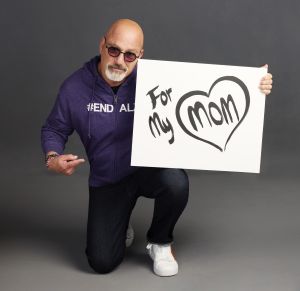 For Howie Mandel, Alzheimer's disease isn't just a cause — it's personal.
In this Q&A, he shares how his mother's diagnosis changed his life and why he's committed to helping others feel less alone.
Howie, what's your personal connection to Alzheimer's disease?
My beautiful mother is in the late stage of Alzheimer's disease. It is the toughest thing I've ever experienced in my life.
There's nobody I've been closer to than my mother. I have never known anyone sharper or more cognizant of life than her. She was the go-to person in every aspect of my life. Even my friends would go to her when they had a problem.
It's heartbreaking because she doesn't know who I am anymore. But it's also empowering because I can use our story to help others.
Is there a song or memory that still connects you and your mom?
When my mom no longer recognized that I was her son, the one thing she still remembered was that she used to sing "You Are My Sunshine" to me.
"You are my sunshine, my only sunshine. You make me happy when the skies are gray. You'll never know, dear, how much I love you. Please don't take my sunshine away."
I'm a guy who doesn't shake hands, but I'll hold her hand and now I sing to her like she used to sing to me.
What were some early changes you noticed in your mom?
Looking back, my first inkling that something might be off was a change in her personality. She was acting differently. She had less patience, repeating herself, telling the same story and forgetting small things.
I questioned the signs at first, but I didn't really think it was an issue. I thought maybe it is part of aging or the fact that she was so busy. I looked for any excuse before taking her to get professional advice. Hearing the words "This is dementia" from the doctor stops you in your tracks. I knew we were on a path where there was no coming back.
You live in Los Angeles and your mother is in Canada. What has long-distance caregiving been like for you?
The long distance is very hard. And, at times, scary. There were moments at the beginning when my mother was incredibly lucid. Usually in the morning when she was well rested. She could carry on a clear conversation. At the same time, she was aware of the changes happening. She would call me and say, "I realized I was in the lobby today and I didn't know where I was going. I don't know why I went to the lobby. I'm losing it, Howie." In those moments, I saw my mom more terrified than I've ever seen another human being. We tried to be her cheerleaders and would act like we weren't terrified, but we were, and still are.
As a judge on "America's Got Talent," you hear a lot of people's stories. Can you share why it's important to you to raise Alzheimer's awareness by telling your story?
Family caregivers often suffer probably as much, if not more at times, than the person living with Alzheimer's. It's a really hard disease to cope with.
When someone loses their physical health, there are often clear answers and solutions. If someone can no longer walk, there are wheelchairs, a walker or a crutch. When someone loses their memory and ability to think, it's really tough.
When it's your mom, dad, sibling or partner, at a certain point, you are all they have. That's why I want to be a prominent voice for this cause. We need to support each other and share our stories.
Do you have advice for people who might be starting out on a caregiving journey for a loved one living with dementia?
My biggest advice is patience. Being a caregiver takes incredible patience. You have to live in your loved one's reality and focus on making them feel safe and comfortable.
When they ask the same question over and over, don't remind them that they already asked. Just answer it again — like it's the first time. It's not easy, but patience helps keep both of you calm and connected. Correcting them can make them feel scared or confused because they truly don't remember.
Don't try to use logic to fight what the disease is doing to their brain. Instead, be their safety net.
While there is no cure for Alzheimer's disease right now, there are treatments available that can slow the progression. What gives you hope for future generations?
What gives me hope is that there is a group like the Alzheimer's Association working every day to find answers to this disease. And I want to be a part of raising awareness and money to identify potential causes and, eventually, a cure.
Every day, we're getting closer to answers. I'm hopeful those answers are on the horizon so that no one has to go through what my mother and my family are going through right now. Until then, I feel supported in knowing I'm not alone and that there is a lot of work being done.
Purple is the signature color of the Alzheimer's movement and the Alzheimer's Association. What comes to mind when you think of the color purple?
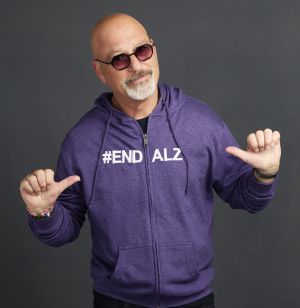 People may not know this, but I'm colorblind. So colors have little meaning to me. Ha!
Purple symbolizing the Alzheimer's and dementia movement is a great way to help get the message across. To me, the message of purple means: It really doesn't matter what color represents Alzheimer's and dementia awareness, we need to end this disease. And to do so, we need everyone's help and support in spreading awareness.
There's help in knowing that you're not alone.
About: Howie Mandel is an Emmy Award-nominated TV host, comedian, actor and executive producer for more than 30 years. Mandel's versatile career has encompassed virtually all aspects of the entertainment spectrum, including television, film and stage. He also continues to perform comedy shows throughout the United States and Canada. Keep up with Mandel on Instagram.