

Make Twice the Impact Right Now
Make Twice the Impact Right Now
Our Autumn 2x Match Challenge is happening right now. Until midnight on Oct. 12, your gift can go twice as far to advance research, promote brain health and help provide care and support for those impacted by Alzheimer’s.
Donate NowDaylight Saving Time can be difficult for those with dementia
Key tips can help reduce ‘sundowning’ for those with Alzheimer’s disease
Springing forward or falling back for Daylight Saving Time can often wreak havoc on the routines and internal clocks of individuals of all ages. When we switch our clocks back for the winter this November, those living with Alzheimer’s and their caregivers may face additional challenges.
Individuals with Alzheimer’s and dementia often are affected by sundowning, which can present as increased confusion, anxiety, agitation, pacing and disorientation late in the day. When the time the sun sets changes, and the days become shorter, it can cause disruption for someone living with dementia.
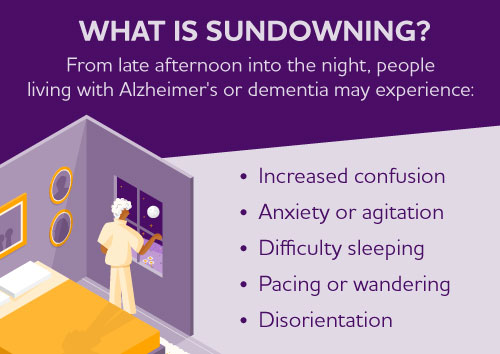 According to Alzheimer’s Association Program Services Director Jean Barnas, caregivers can help their loved ones by keeping their days structured.
“Alzheimer’s can feel very out of control for people, so they rely on their caregivers for all of the cues,” said Barnas. "A structured, routine and predictable environment can make things easier for them."
More dark hours in the winter can result in increased hours when a person living with dementia could experience these issues, but there are some key tips that can help caregivers with this transition and the longer winter nights:
- At the end of Daylight Saving Time, shift strategies to account for the earlier darkness, like shifting the person’s scheduled routine an hour earlier.
- Engage your loved one in activities near dusk to distract from the change in light.
- As much as possible, encourage a regular routine of waking up, meals and going to bed.
- When possible and appropriate, include walks or time outside in the sunlight.
- Make notes about what happens before sundowning events and try to identify triggers.
- Reduce stimulation during the evening hours (e.g. TV, doing chores, loud music, etc.) as they may add to the person’s confusion.
- Keep the home well-lit in the evening, as adequate lighting can reduce confusion.
- Try to identify activities that are soothing to the person, such as listening to calming music, looking at photographs or watching a favorite movie.
- When behavioral interventions and environmental changes do not work, discuss the situation with your loved one’s doctor.
“It’s definitely harder in the winter,” Barnas said. “But with some shifts in strategy, the effects of the time change can be mitigated and caregivers can always call or email us for help creating some strategies to try. Our Helpline is available 24/7/365 at 800.272.3900.”
Caregivers can share what has worked for them and get more ideas from others on ALZConnected, the Association’s online support community for caregivers. Support groups are also available through our Michigan Chapter both online and in person around the state: find a group near you here.