

Make Twice the Impact Right Now
Make Twice the Impact Right Now
Our Autumn 2x Match Challenge is happening right now. Until midnight on Oct. 12, your gift can go twice as far to advance research, promote brain health and help provide care and support for those impacted by Alzheimer’s.
Donate NowHarvard Alzheimer’s Researcher Focused on Enrolling Latinos in Clinical Trials
Dr. Quiroz, you are extraordinarily passionate about your work. How did Alzheimer’s become your research focus?
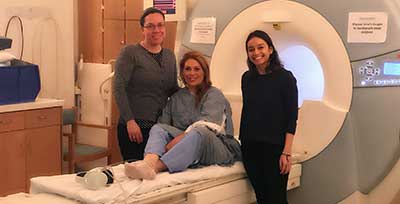 I am fortunate that no one in my family has had dementia or Alzheimer’s, but through my long-term work in my home country, Colombia, and working with my patients in the United States, Alzheimer’s disease has made an impression on me that made me realize this is my calling and I have to help in any way I can.
Tell us about the research you are working on right now.
For the past few years, I have been focused on trying to understand changes in the brain that can be used as biomarkers of the disease several years before cognitive decline develops.
In the family I studied in Colombia, I researched everyone from age 7 to 90 to understand the trajectory and the course of disease. Their situation is unique, but in all my work with Alzheimer’s patients, I am trying to characterize what’s really going on: How do biological changes play a role? Genetics? I absorb and collect data, everything and anything I can learn from.
Locally, I have been working on a registry known as the Boston Latino Aging Study (BLAST) which I hope will help with the characterization of aging in Latinos. This registry will include individuals from the community who are over the age of 60.
Two years ago, my team also created a new program called the Multicultural Alzheimer Prevention Program (MAPP), which originated in a culturally diverse community. This program was created to improve our understanding of older diverse individuals and help inform the way we care for those with Alzheimer’s disease and dementia.
Why is it important for the Hispanic/Latino population to be represented in clinical trials?
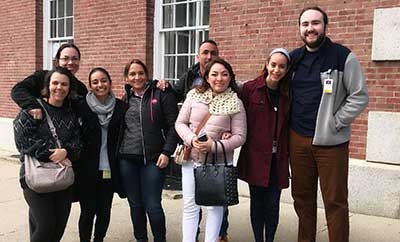 Working in the Latino communities, I have seen firsthand that many people understand the importance of participating in research. When they realize how they can make a difference, they become motivated. Not only do they see this as a way to help the community at large, but they also can help their own children or grandchildren so that they may not have to experience this disease in the future.
 But one of the limitations I see often is that there are more restrictions than options when it comes to the Latino population and clinical trials; the majority of the trials require people to speak English, and they may not speak it at all or very well.
We simply need more options. We need to make Alzheimer’s research more inclusive. Almost everything we know about Alzheimer’s has been learned from Caucasian samples and not diverse samples. Unfortunately, what we know about Alzheimer’s and other dementias does not represent the diversity of our communities. When the wider population is given the chance to participate in more clinical trials, it will benefit researchers, participants and future generations.
What are your hopes for the future of Alzheimer’s research?
I’m excited about progress in my field. As Chair of the Diversity and Disparities Professional Interest Area (PIA) of the Alzheimer's Association International Society to Advance Alzheimer's Research and Treatment (ISTAART), I am very committed to increasing global representation in Alzheimer's disease research that allows people from different cultures and countries to connect and learn from each other, motivating researchers to work together and focus on collaborating efforts to end this terrible disease. This work gives me hope for the future. The Alzheimer’s research community needs input and representation from people from all around the world in order to find a cure. That is the main goal of researchers and something we all work toward.
Related articles:
Research & Progress
TrialMatch
Our Commitment to Diversity