

Make Twice the Impact Right Now
Make Twice the Impact Right Now
Our Double the Hope Match Challenge is underway, but not for long. From now until Oct. 23, your gift can have double the impact on advancing research and brain health discoveries, as well as helping to provide care and support to those impacted by Alzheimer’s disease.
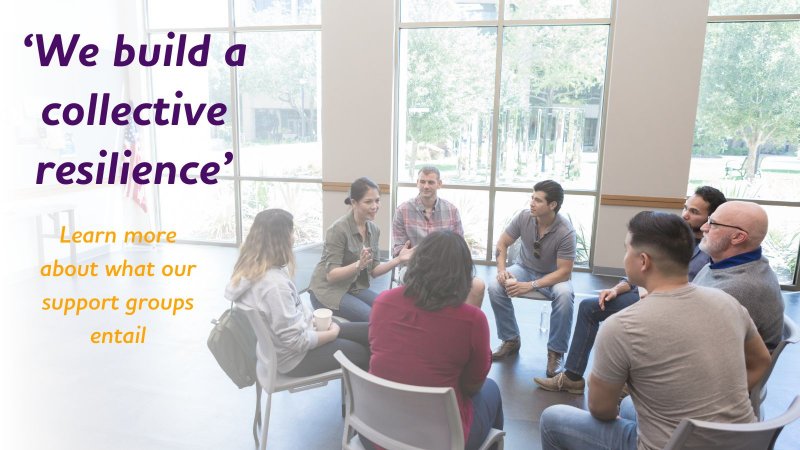
Donate Now'We build a collective resilience': Learn more about what our support groups entail
Susan Manson and her husband, Al, were left lost and overwhelmed after Al’s diagnosis of mild cognitive impairment (MCI) nearly eight years ago. Manson recalls that her husband was embarrassed by this diagnosis and asked her not to speak to their extended family or friends about it. “I honored his wishes but it was a heavy burden to bear when so much was changing,” said Manson. “It was soon apparent to me that I needed help managing this journey.” Manson asked her husband’s primary care physician about support groups and he recommended one facilitated through the Alzheimer’s Association.
Susan Manson and her husband, Al, were left lost and overwhelmed after Al’s diagnosis of mild cognitive impairment (MCI) nearly eight years ago. Manson recalls that her husband was embarrassed by this diagnosis and asked her not to speak to their extended family or friends about it.
“I honored his wishes but it was a heavy burden to bear when so much was changing,” said Manson. “It was soon apparent to me that I needed help managing this journey.”
Manson asked her husband’s primary care physician about support groups and he recommended one facilitated through the Alzheimer’s Association.
“After my first support group meeting, I knew that this was the best decision I could have made,” said Manson. “The warmth, compassion and understanding of the facilitators and my fellow caregivers gave me hope that I could navigate this journey. Through their advice, I opened up to friends and neighbors about our situation and it lowered my stress level to talk about it.”
Manson’s support group meets twice a month on Tuesdays via Zoom and is co-facilitated by Cindy Beller and former dementia caregiver Nancy Duffy. On alternate Tuesdays, those caring for individuals in the early stage of Alzheimer’s meet in-person at Birmingham Presbyterian Church. Beller’s second group is for caregivers of people with younger-onset dementia, meeting monthly via Zoom.
Beller was primary caregiver for her husband until his passing at age 60 following a 10-year-long battle with Lewy Body dementia and has served as co-facilitator of this support group for the past 13 years. For current caregivers who may be on the fence about whether or not a support group is right for them, Beller offers advice and clarity on what to expect.
“Participants often say, ‘I don’t feel comfortable talking to my friends and family about the gory details of what caregiving for my loved one with dementia really looks like day-to-day,’” explains Beller. “But then you are left without the help and support that you would be getting from them and it isolates you.”
When a new participant joins the group, Beller and Duffy begin the meeting with everyone going around the room and introducing themselves, who they are caring for, how long they have been caring for them and their loved one’s diagnosis if they have one.
“To establish common ground, I tell them I cared for my husband for 10 years and have been leading this group for 13 years after that,” says Beller. “I tell them this group is confidential and no matter what they’re feeling, someone else here has felt that way, too. What they are feeling is always valid.”
Manson recalls how different it felt to talk to a group of people who understood how she was feeling.
“Some friends, relatives and acquaintances who have no experience with dementia tend to judge caregivers’ actions,” said Manson. “Group is one place where I do not feel judged by anyone because we all get it.”
Beller reminds new attendees that they are going to hear difficult things in the meeting, which is important to keep in mind when there are participants whose loved one has progressed to a further stage in the disease than others’. As they listen to these experiences, Beller and Duffy also ask that they keep in mind that dementia affects everyone differently.
“I remind them that just because one caregiver chose to place her husband in a facility does not guarantee that you will have to,” said Beller. “Or that just because one person living with dementia has a tendency to wander does not guarantee that your loved one will wander.”
In these meetings, they do a round-robin discussion where everyone shares recent challenges they have faced while caregiving and how they feel about it. Participants can pose questions to the group or make suggestions to those who bring up an issue they may have already faced.
“Participants do not have to speak if they’re not comfortable,” said Beller. “We typically start off with people who are already in the group, make our way to the new person and ask if they’d like to share. If they decline, I’ll offer to come back to them if they have any questions.”
Longtime members welcome first-time attendees into the group with a kudos for having the courage to attend a support group and share their story. Both the facilitators and participants recognize that it is difficult for caregivers to sacrifice an hour of free time to attend a meeting instead of grocery shopping or doing a self-care activity.
“Going to a support group is the best self care you can do,” said Beller. “Your world starts to open up when you see that there are other people on this journey who have made it through and come out the other side as whole human beings, and you can, too.”
Manson echoes this sentiment. “Taking that first step to attend a support group meeting has allowed me to both become a better caregiver for my husband and prioritize my own self care.”
In the case of the group she attends, Manson appreciates that some of her fellow support group participants are currently caring for people at various stages of the disease.
“We are all part of a club no one wants to belong to,” said Manson. “And that creates a bond between new and longtime caregivers. Those who have been traveling this path for a longer time can share their experience with new caregivers who can learn from the successes and mistakes of others. Together we build a collective resilience that empowers us with a strength we might not be able to find on our own.”
As a former caregiver, Beller understands the purpose that offering advice brings to caregivers. “By sharing your experience, you help other people, too,” she said. When someone brings up a problem and someone else says ‘here’s what I tried that worked,’ it makes that person who suggested something feel useful. This difficult experience they went through allowed them to help someone else and make their journey a little bit easier.”
For many participants, the longer they attend a caregiver support group, the more they take away from it.
“Sometimes you don’t realize until you’ve been coming to the group for a while how good it makes you feel,” said Beller. “I have people who miss a week and say, ‘I couldn’t come last week and I missed you guys so much! I feel so much better after I leave here.’ And that is exactly why we do this.”
Support groups can often be a starting point for becoming aware of other resources and support services provided by the Alzheimer’s Association that may positively impact your caregiving journey. In addition to support groups, the Alzheimer’s Association offers a wealth of programming, including care consultation and educational programs. Find out if a caregiver support group is right for you by learning more on our website here or by contacting our 24/7 Helpline at 800.272.3900. View our full list of offerings near you at alz.org/CRF.