

Make Twice the Impact Right Now
Make Twice the Impact Right Now
Our Double the Hope Match Challenge is underway, but not for long. From now until Oct. 23, your gift can have double the impact on advancing research and brain health discoveries, as well as helping to provide care and support to those impacted by Alzheimer’s disease.
Donate NowBalance, Reprieve and Endurance: One Man's Perspective on the Multiple Forms of Loss that Come with Alzheimer's

Son and two time caregiver Corey Kvasnick describes how his family navigated the 'long corridors' of Alzheimer's
by Corey Kvasnick
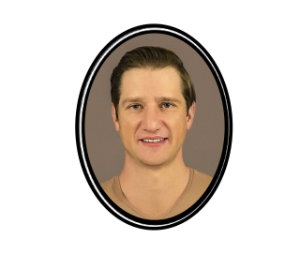
There are things you learn about life only through the long corridors of death. Alzheimer's is one of those corridors.
For the past twelve years, I have been a caregiver, first to my father, then to my mother. Both were diagnosed with Alzheimer's, my father at fifty-nine years old. Both cases were born from different circumstances. At twenty-years old, my father suffered a traumatic brain injury during a head-on collision on his motorcycle. He was airlifted from Elk River, Minnesota to a hospital in Minneapolis where doctors drilled holes in his head to relieve the swelling. He was in a coma and wasn’t expected to live. After the accident his personality changed slowly, but this change accelerated when he reached his forties. By the time I was born, he was already living with erratic mood swings, diabetes, and a sedentary lifestyle. We believe that injury played a critical role in his Alzheimer’s diagnosis.
Despite that, my father never missed a day of work. He was a Vice President of Purchasing for an aluminum refinery. When I was young, we went to Disney World on vacation, and as we entered the park, he got $100 in quarters. I thought it was for playing games, but the quarters weren’t for games, they were for business calls. He found where the payphones were located and took up two of them. For the rest of our time at Disney World he stayed there and worked, letting my mother and I navigate the park. That was my father.
As his Alzheimer’s advanced, he became more of what he already was. It didn’t reinvent him. It unmasked him. My mother and I spent years hiding his diagnosis by telling friends and work colleagues that, “Mitch is just stressed” or “he’s just tired.” One day my father abruptly quit work. In time as he progressed, his behavior became more erratic. He began mowing the lawn at 1am. The calls from my mother began to increase. What started off as five calls per day, quickly became ten to fifteen. Each call was a pit in my stomach, the worst calls came in the middle of the night, while sound asleep.
At age thirty, I was building my own career as Vice President and Partner of an industrial metal recycling company, managing nearly 150 employees. I wanted to do things thirty-year olds do, I wanted to date, I wanted to love. Instead, I spent most nights on the phone with my mother or at their house helping to calm my dad and worrying about how to not hurt him if he became violent toward me. Doctors put him on medication to treat his agitation, but he seemed immune. People who have never personally experienced it don’t understand what Alzheimer’s is. It’s not just a disease of forgetting. It’s a disease of vanishing. Slowly, incrementally, it steals someone from themselves and from you. But what’s most overlooked is not what happens to the person with the disease, it’s what happens to the people who care for them.
We didn’t know it yet, but our family was in the early stages of vanishing—not just my father, all of us.
As the slow creep of invisibility takes hold, over the span of a decade or more, people stop showing up. Their capacity for sympathy has an expiration date. No one wants to be hit over the head with reminders of their mortality. Walking into our house as a guest was a burden. But the burden doesn’t end there. It gets heavier. Still, you keep going. You gain skills you never wanted. I gained a working knowledge of the hierarchy of memory care facilities. My father was denied access to every single top-rated memory care facility we applied to because of his aggression. “He’s a liability” they would say over and over again. My mother couldn’t care for him, neither would a facility within a one-hundred-mile radius.
One day I got a call from my mother. “I did it,” she said. She’d called an ambulance to pick him up. It was our last resort—it was the only way into a memory care facility literally through the side door. After the ambulance ride placed my father in a geriatric psych ward, after he got pumped full of drugs, he had an observation window of 72 hours. If after that time he was incident free, he could be relocated to a memory care facility. In a drug-induced state, he passed the test. Once he got to the facility he was kicked out within 24 hours. The quality of facilities takes a steep dive after that.
My father got placed in what felt like Alcatraz for Alzheimer’s, a place not listed as an option when you work with care coordinators. A facility for the too-angry and too-poor. One of the first times my mother visited him there, my father, who could no longer communicate and no longer knew place or time, still knew enough to sense how bad this place was. When an erratic patient was nearby, he grabbed my mother’s hand and put his finger to his lips.
The doctors and I urged her not to visit, warning that it wasn’t healthy for her. But she felt it was her responsibility, so she returned. She was in the beginning stages too.
The first Thanksgiving after my father’s passing, I went to her house to help her prepare the meal. I arrived at noon as she’d instructed the day before. My mother was surprised to see me. “What are you doing here?” she asked. She put a frozen turkey in the oven, but never turned it on. I began preparing for another round with the disease.
I have come to understand that there are two types of caregivers: the primary and the secondary. The primary caregiver bears the full weight. Their time, energy, finances, identity, all consumed by the disease. The secondary caregiver, often well-meaning, offers support in moments. But for the primary, there is no reprieve. There is no balance. There is only endurance. I was the primary caregiver for my mother, and the secondary caregiver for my father. I am an only child, with no siblings, and no cousins. No real family network. My support system was silence. My inheritance was responsibility. Alzheimer's became my full-time reality, and eventually, part of my identity.
My father died in 2022. My mother, now in the final stages, was diagnosed in early 2023. Her story is very different from his. She was anxious, overwhelmed, and emotionally suppressed. Her only addiction was Diet Coke, but her kindness was unmatched. My mother rarely exercised, hardly drank water, and in her later years suffered from untreated sleep apnea. As my father’s caregiver, she deteriorated alongside him. Eventually, she was prescribed Adderall to stay awake after she began falling asleep at the wheel. The stimulant helped for a time, but it was a bandage on a wound that was already spreading. The stress led to a stroke. The stroke triggered vascular dementia. And now, I’m watching her fade, just as I watched him. I had no break in between. No real recovery time. Just a relentless passage through one of the most grueling, misunderstood illnesses there is.
Alzheimer’s doesn’t change a person as much as it strips them down. It removes the higher brain functions—judgment, social filters, inhibition—and what’s left is the most primal self. I saw this with both my parents. What strikes me most is how each of them responded to the disease in ways that matched who they were emotionally at their core. Alzheimer’s didn’t make them into someone new. It exposed them. I personally feel that people who are angry become angrier. Those who are anxious retreat further. Alzheimer’s removes the mask, and what you’re left with is raw, unrehearsed emotion. No performance. No filter. Just the primitive self.
But this essay isn’t really about them. It’s about what was left behind. What I carry. What caretakers carry. I am now forty years old. No wife, no family. The long-term nature of Alzheimer’s is one of its cruelest traits. It has no climax. No moment of clarity. Just slow erosion. Every day, you wake up inside a car crash happening in slow motion, and you are forced to keep watching. You can’t close your eyes. You can’t jump out. You just sit there, bracing for impact, over and over again.
And in that process, you grieve. But not once. Not at the end. You grieve repeatedly. I have come to believe Alzheimer’s is a disease of three deaths. The first death occurs at diagnosis. That’s the moment you lose the future. You now know where the story ends, and you begin to say goodbye, quietly, and painfully. The second death is in the cognitive form. When the person loses all memory, all language, all awareness. When they no longer recognize your face. When they can no longer speak your name. That is when the emotional death occurs. You are now taking care of a body, not a relationship. The third death is physical. The final breath. And yet by that point, you have already buried them twice.
Each of these deaths requires grieving. Each feels like the end. And when you multiply those three deaths by two parents, as I’ve had to, you begin to understand the psychological toll. I have lived through what feels like six funerals for two people.
Now, as I near the end of this chapter, I face a new kind of fear: re-entry into society. I don’t know who I am without this role. No break, no breath, no space to rebuild. To my peers I’ve always been the Alzheimer’s guy, and there’s no way to back out of it once you’re that. This experience has changed me. Not in the poetic, transformative sense. But in the sense that something inside me has died too. A part I don’t know how to reclaim. A part that may be gone for good.
I don’t say this for sympathy. I say this because it's the hard truth. Alzheimer's doesn't just destroy the person with the disease, it rewires the people left behind, it makes them quieter. Older, and more tired. It doesn't just end with death. It lingers, like smoke in a house long after the fire has gone out. So where does that leave me? I don’t know yet. I do know I, like thousands of others, am a walking testament to the real legacy of Alzheimer’s, not just memory loss, but full emotional collapse carried every day in complete silence. Not just forgetting but being forgotten.
In 2025, I was a sponsor at the Purple Gala, an Alzheimer’s event in Minneapolis. I dressed in a suit and drank alcohol and had fun. My mother had just had another stroke which left her unable to move her neck. She’d been relegated to a Geri-Chair—a wheelchair designed for long-term sitting— at her memory care facility where she and three other people in vegetative states lay in the common area of their unit. They can’t be alone in their own rooms because of their fragile states. Everyone knows if you’re in the common room in a bed wheelchair you’re nearing the end. At the gala a woman in her early fifties gave a moving speech about her story with early-onset Alzheimer’s, about the promise of a new treatment. At every gala there is always a promise of a new treatment.
What broke me was her son standing next to her. All I could think about was his future, and how he might slowly join me in the world of the invisible. I wanted to pull him aside and tell him: I see you. I understand where you are. I know what it feels like to carry the weight of a disease that never lets up. I know how lonely it can be, how thankless. I am so sorry you have to go through this. Life isn’t fair. We were dealt one of the hardest hands. But we keep playing it, because that’s what love demands. I hope you have love around you — family, friends, someone who stays when most others disappear. You won’t always be okay; that’s part of the job. You will carry grief in real time. You will survive something that is reshaping you. And if nothing else, know this: you are not invisible.
I didn’t say any of this to him. Instead, tears began pouring from my eyes. I tried hard to stop but couldn’t. I never cry. That was the one thing in my life I could control. I didn’t remember what crying felt like. Stop it, stop it. I’d learned to separate my conscious self from my subconscious self for so long that I was only comfortable in the rational world. But seeing that kid I knew all I could really say to him for sure, was you can be a good son, the best son, but there’s only one way out. I hated being his future self. I hated knowing how it all would end.
There is a unique psychological toll to living for so long in the shadow of death. Most people think of death as a moment. A singular event. But for caretakers, it becomes a timeline. A landscape you live inside. There is no clean break, no sharp before and after. You live for years in a suspended space—waiting, bracing, grieving, adapting—always half-present in your own life. You try to work. You try to talk about other things. You pretend you are still part of the world. But part of you never is. You’re always watching the railcars of the disease move forward, powerless to stop the train.
Chronic anticipation alters your brain. You become numb in ways you can’t explain. It changes how you relate to joy, to control, to time. You learn how to plan funerals in your mind while washing dishes. You learn how to shrink your hope into something safer. You learn how to guard your heart so you can make it through another day. That’s what Alzheimer’s teaches you, how to stay in motion when you’ve already emotionally collapsed.
And when the end finally nears, and you’ve endured the waiting for so long, so many deaths later, one day you look in the mirror and don’t recognize the person in the reflection. And that brings me to the part no one prepares you for: reentry into society. It sounds strange, but I don’t know how to live normally anymore. I don’t know how to relax. I don’t know how to casually make plans, or think long-term, or do things without the hum of dread in the background. I have lived in a state of vigilance for so long, I’m not sure who I am without it. For twelve years, every decision, every day, every conversation, existed within the orbit of illness. I wasn’t just caregiving. I was adapting my entire psychology to crisis. I became skilled at it. And now that the crisis is ending, I don’t know how to undo it.
Reentry is not a return. It is a reconstruction. You come back to a world that kept spinning without you. You try to rejoin conversations, reconnect with people, remember who you were before the grief began. But you don’t quite fit anymore. The world is too fast, too bright, too surface-level. You’ve been living in depth, in silence, in endurance. And now, nothing feels quite natural. So you move slowly. You try. You take steps. You wonder if you’ll ever be fully open again. And maybe you won’t. But that, too, is a kind of survival.
The final chapter of my journey as a caregiver is coming to an end. Each visit with my mother takes days to recover from. The image of someone you love folded into the inevitability of death, hollowed by the long course of disease, is hard to carry. But it’s what this stage becomes. We are no longer hoping for improvement. We are managing decline. Bearing witness. Preparing ourselves, myself.
In the end, what stays with me most is the difference between my parents’ final chapters. My father spent his last months in a facility that felt closer to punishment than care, a place that stripped him of dignity along with his memory. My mother, by contrast, has been surrounded by compassion, safety, and humanity in her final stage. It doesn’t erase the heartbreak, but it does soften it. It reminds me that dignity matters, even at the end, maybe especially at the end.
What I’ve learned is that Alzheimer’s doesn’t just erase memory. It rewires families. It rewires caregivers. And when the disease ends, the silence it leaves behind is just as heavy. If there’s one thing I carry forward, it’s this: we are not invisible.
Every caregiver is a witness.
Every caregiver’s grief is real.
You are not alone. Many of us know the weight you carry, the exhaustion that never seems to end, and the grief that comes long before the final goodbye. I wish you strength in the days when you feel invisible, and peace in the moments when love is all that’s left to give. What you are doing matters. You matter.
Need to connect with no-cost 24/7 caregiver resources through the Alzheimer's Association like Corey?
Start 👉 https://www.alz.org/help-support/resources/helpline