

Make Twice the Impact Right Now
Make Twice the Impact Right Now
Our Autumn 2x Match Challenge is happening right now. Until midnight on Oct. 12, your gift can go twice as far to advance research, promote brain health and help provide care and support for those impacted by Alzheimer’s.
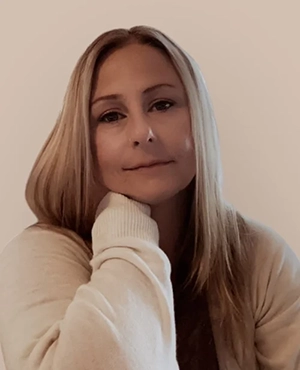
Donate NowTara Blessinger, a death doula, helps families navigate end-of-life care. Inspired by personal loss and her own risk of developing Alzheimer’s, she became a sponsor for Walk to End Alzheimer’s – Northern Nevada. Her message: share, feel, heal.
Tara Blessinger, a certified death doula and founder of Purple Iris End of Life Services, helps families navigate end-of-life care with compassion, planning, and legacy projects. Inspired by personal loss and her own genetic risk for Alzheimer’s, Tara now partners with the Alzheimer’s Association as a sponsor for Walk to End Alzheimer’s – Northern Nevada. Her advice: share stories, express feelings openly, and create meaningful closure.
 A career in service to others
Taras Blessinger’s first experience with death was when she was eight. Her father, who served in the Air Force, was killed in action during Desert Storm. At 17, Tara followed in her father’s footsteps and enlisted, joining the U.S. Navy instead. A few years later, after the birth of her daughter, Tara went back to school earning both a bachelor’s and master’s degree.
However, it wasn’t until the experience of her stepfather’s terminal cancer diagnosis that she thought to take a death doula class. This was her attempt to help her own grieving process. “I did that training mostly for me and my knowledge,” said Tara. “Everyone copes with loss differently. I learned about grieving and dying and how it’s viewed across cultures and modern times versus 150 years ago.”
After completing the course, Tara realized she wanted to help others process their grief as well. She started her own business called Purple Iris End of Life Services. “The intent is to walk with people no matter where they are in life and help them as they process death,” said Tara. “Generally, this will be with people [who have] terminal illnesses. I’ve started working with people in [care settings] to do legacy projects, getting there things together, processing and planning, those kinds of things.
“These experiences have shaped my ability to be present with others in their pain and have helped me become comfortable with death as a natural, meaningful part of life.”
What is a death doula?
Many people may be familiar with a doula used during pregnancy, usually a non-medical professional there to assist in the birth of a baby. A death doula is also a non-medical professional but instead they assist as a person dies.
From her own website, Tara says:
A death doula is a non-medical support professional who provides emotional and practical care to individuals and their loved ones as they navigate the end-of-life process. Helping to ease fear and uncertainty by thoroughly explaining the dying process, facilitating meaningful conversations, honoring personal values and rituals, and creating space for an intentional and supported transition.
As a death doula, my role is to walk alongside – not to fix or direct – but to witness, support and hold space with compassion and integrity.
“A lot of my work is about the planning process, information and education,” said Tara. “For someone experiencing cognitive decline, my role in their life is just to be there and be present. It’s companionship. I’m not going to explain in rational terms what’s going, it’s just a matter of being with them.”
A genetic connection
According to the Alzheimer’s Association 2025 Alzheimer’s Disease Facts and Figures report, Americans want to know if they have Alzheimer’s disease and want early access to testing. The vast majority (99%) of Americans believe that early diagnosis is important. Seventy-nine percent would want to know if they had Alzheimer’s disease before experiencing symptoms or before symptoms interfere with daily activities.
Up until a few years ago, Tara didn’t really have a connection to the disease. It wasn’t until she took a DNA test that she found out she has the APOE4 gene. Apolipoprotein E-e4 (APOE4), discovered in 1993, is the first gene variation found to increase risk of Alzheimer’s and remains the risk gene with the greatest known impact. Having this mutation, however, does not mean that a person will develop the disease.
“I have a copy of APOE4 gene and I’m at a slightly higher risk of developing Alzheimer’s,” said Tara. “I felt like a ticking time bomb for my family. My daughter is 21 and we’ve developed humor around it. [My daughter understands that one day she’s] going to have to be my caregiver.
“In that way, it’s a good thing to know ahead of time. It would be amazing in the next 20 years if they developed some kind of [cure] for it. In the meantime, at least my daughter and I are both informed.”
 Partnering with Walk
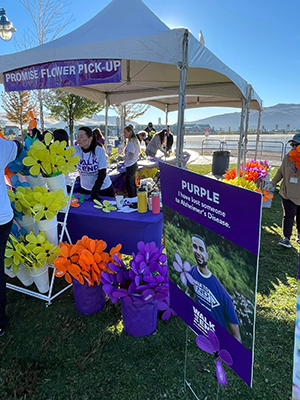
While at the Chamber of Commerce business fair, Tara came across a booth for the Alzheimer’s Association. She saw the connection between her personal life and professional life and decided she wanted to partner with the Association. Tara committed to a $5,000 sponsorship for Walk to End Alzheimer’s – Northern Nevada.
“I was the Reno Business Expo, and I met with someone from the Alzheimer’s Association,” said Tara. “I got to thinking it would be a really great cause to give to. It felt like the right thing to do.
“I think the cause reaches people in every single demographic that’s out there regardless of race, ethnicity, where you come from or what your socioeconomic status is. It’s something that can affect people across all of this. [Alzheimer’s] research benfits every walk of life and is meaningful.”
Gathering stories
Tara encourages people to share their life stories before it’s too late and be honest about your feelings. “I think the most damaging thing a person can do to themselves when they’re losing a loved one is holding back those feelings,” said Tara. “What brought me the most sense of closure as my stepdad was going through the dying process, was telling him how much he meant to me and my sister during his life. My biggest piece of advice is to tell their stories. Talk about their life and say all the things that need to be said.”
Meet Tara at Walk to End Alzheimer’s – Northern Nevada, October 18, 2025, at the Sparks Marina. Not in Northern Nevada? Visit alz.org/walk to find a Walk near you.