

Triple Your Impact This Holiday Season
Triple Your Impact This Holiday Season
Celebrate the holidays with a year-end gift that can go 3x as far to help provide care and support to the millions affected by Alzheimer's disease, and to advance critical research. But please hurry — this 3x Match Challenge ends soon.
Donate NowResearchers at the University of New Mexico have received a $1 million Alzheimer’s Association Part the Cloud grant to further their work on a promising approach to the disease: targeting tau tangles in the brain utilizing medications that have already been approved by the FDA for treating other medical conditions.
More than 116 years after Alzheimer’s disease was first diagnosed in 1906, the U.S. Food and Drug Administration (FDA) in rapid succession approved two new medications that have shown promise in slowing the progression of this incurable disease.
Now, researchers at the University of New Mexico believe they are on the brink of the next breakthrough in the treatment of what many consider the most dreaded disease on earth. And, as an added bonus, this new treatment is modeled on two medications already approved by the FDA for use in treating other medical conditions.
A new approach
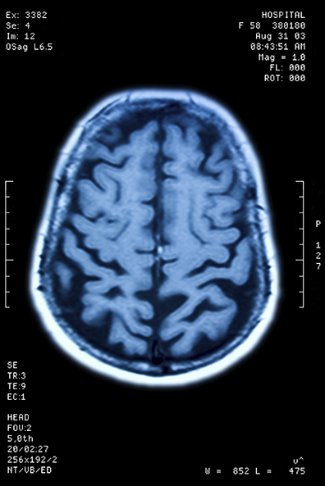 The two Alzheimer’s medications approved by the FDA have proven effective for some individuals in the early stages of the disease by targeting amyloid plaque that builds up in the brain of affected people. But Dr. Kiran Bhaskar, professor in the Department of Molecular Genetics & Microbiology at the University of New Mexico’s School of Medicine, believes another approach may offer even greater health benefits.
“In addition to removing amyloid with those FDA-approved drugs, it is essential to remove another protein, tau, which accumulates as tangles in the brain and more closely mirrors the location of areas of the brain that deteriorate and shrink as Alzheimer’s progresses,” he said.
A career-defining quest
The search to find a vaccine that can effectively remove tau tangles from the brain has been a focus for Dr. Bhaskar and his team at the University of New Mexico since 2014. Recently, a $1 million grant from the Alzheimer’s Association Part the Cloud initiative has provided the jump-start that they needed to take the research from promising trials on mice and monkeys to a phase 1 clinical trial on humans.
The next year will be spent refining the vaccine, which will occur in partnership with a pharmaceutical company (TheraVac Biologics). He anticipates that recruitment for the phase 1 trial – to confirm the safety of the vaccine and how patients tolerate it – will likely begin in the fall of 2026.
The advantages of this new approach
The approach that Dr. Bhaskar and his team are taking has three specific advantages over the treatments that the FDA has already approved. The first is safety: the treatments now in use come with the risk of side effects, including ARIA (amyloid-related imaging abnormalities), which could cause brain swelling or bleeding, albeit significant attempts are being made to prevent this.
In contrast, the medications that the UNM team is basing its approach on: Gardasil 9, a vaccine used to protect against diseases caused by the human papillomavirus (HPV); and Recombivax HB, a vaccine used to prevent infection by all forms of the hepatitis B virus (HBV), have not been shown to cause brain health issues.
The second advantage is speed to market. While the phase 1 trial is designed to test for safety and human toleration of the vaccine, no significant issues are anticipated because the FDA has already reviewed and approved the two vaccines for other indications with similar technology.
Additionally, unlike the already-approved Alzheimer’s medications that are administered through monthly infusions, the tau tangle vaccine can be delivered via intramuscular injection, much like a flu shot. While the frequency is yet to be determined, Dr. Bhaskar expects that it would involve one primary shot with several booster shots.
Increased effectiveness
After the one-year phase 1 research, the University of New Mexico team would look to begin phase 2 to assess the effectiveness of the vaccine in targeting the tau tangles in the study participants’ brains. Dr. Bhaskar is looking forward to that phase as the results of trials on mice and monkeys were very encouraging. Researchers observed that animal study subjects experienced the elimination of tau tangles and improvements in their cognitive performance.
History has shown that test results from animals do not always translate to humans, so Dr. Bhaskar knows the team will need to proceed methodically.
“The vaccine does seem to do well, but we have to move with caution,” he said.
“We are very proud to see this leading-edge research being conducted at the Alzheimer’s Disease Research Center (ADRC) at the University of New Mexico,” said Donald Smithburg, executive director of the Alzheimer’s Association of New Mexico. “There are 46,000 New Mexicans among the 7.4 million Americans living with Alzheimer’s. The world is ready for advancements in treatment – and hopefully a cure – for this dreaded disease.”