
Double Your Impact Today
Double Your Impact Today
This is your moment to do more. Give by midnight on Sept. 10 and your gift can be matched — up to $25,000 — to fund research, protect brain health, and help provide care and support to those facing Alzheimer's disease.
Donate NowAlzheimer's disease is not a medical condition that is discussed frequently in the Jemez Pueblo north of Albuquerque, but a collaborative education program between the Alzheimer's Association and staff at the pueblo is looking to change that.
Talking about an important – but unwelcome – topic in the Jemez Pueblo
There aren’t a lot of people in Jemez Pueblo getting a diagnosis for Alzheimer's disease. It’s not that the disease isn’t present, but it’s a tough conversation to have in this close-knit community, and it’s not one that people want to have.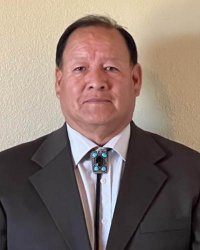 Cornell Magdalena is trying to change that. The 57-year-old Senior Care Coordinator for Jemez Pueblo is a lifelong resident of the community north of Albuquerque. Magdalena is also a lifelong student, currently working on his bachelor’s degree at the University of New Mexico in Intercultural Communications and in pursuit of a master’s degree in Population Health. And he’s a lifelong servant to his community, committed to returning value to his pueblo and his people.
During National Native American Heritage Month (November), Magdalena took time from his full-time job and his hectic education schedule to reflect on the sensitive topic of Alzheimer’s, his collaboration with the Alzheimer’s Association, and the importance of educating a reluctant community – including himself – that more knowledge about this fatal disease is a good thing.
Alzheimer's in the Indian community
There are 46,000 New Mexicans among 7.4 million Americans living with Alzheimer’s disease, the 6th-leading cause of death and only major disease without a prevention or cure. Sadly, the risk of developing Alzheimer’s is about 50% higher in the Indian community than in the general population due to a number of health factors including higher rates of vascular disease, hypertension, and diabetes.“We do have people living with (Alzheimer’s),” Magdalena said, “but a lot of people are afraid to ask. People may say ‘grandma is losing her memory,’ but they are unaware of what Alzheimer's is. It’s important that people get the education they need.”
Building trust
A lack of knowledge about Alzheimer's is one issue. Another is the need to communicate with this community of about 3,900 in its own language. Community education volunteer Joseph Fragua Jr. is helping with the latter challenge, delivering Alzheimer's Association educational programs in the native Towa language alongside Julie Rogers, the Association’s Community Engagement manager for New Mexico.Magdalena has taken the process a step further. After returning to Jemez Pueblo upon earning his studies in a three-year certificate program in public health from Johns Hopkins University, he is focused on bringing a local approach to healthcare to the community.
A key element of his approach is in-person conversations, typically in the home of Jemez families. Increasing the frequency of those visits is part of his plan going forward.
“I’ve had teachings from my grandma that elders have different ways of communicating, both verbally and non-verbally,” said Magdalena. “It helps me to help them by listening to their stories.
“Even when you’re from the community, you have to build trust and relationships,” he added. “I love meeting with the elders, speaking the language, knowing the culture and traditions. This is my community. This is where my heart is.”
The challenge of getting a diagnosis
Even setting aside the Indian community’s aversion to talking about Alzheimer’s and acceptance of it as a part of normal aging, perhaps the biggest challenge to getting an Alzheimer’s diagnosis in Jemez Pueblo – and across New Mexico – is the fact that the state is what is referred to as a “neurology desert,” one of about 20 states across the U.S. that the Alzheimer’s Association has determined have a significant gap between existing neurology resources and the medical needs of the community, particularly for those outside of Albuquerque. And getting access to the medications newly-approved by the FDA that show promise in slowing the disease’s progression is challenging.“These states, including New Mexico, have a projected chronic shortage of neurologists combined with a rapid rise in Alzheimer's disease and other dementia cases,” said Rogers. “The research further shows that, due to the projected burden, additional resources, training and education are necessary for primary care physicians and caregivers. That’s where our collaboration with the Jemez Pueblo plays an important role in familiarizing families with the warning signs of Alzheimer’s and where to go for support.”
Thus far, the educational sessions in the Pueblo have been well-received, consistently drawing over 25 people per class. And post-class surveys have shown that residents appreciate having the content translated into Towa.
“A lot of other tribes are losing their (native) language,” said Magdalena. “There may not be enough people fluent to interpret the presentations in the native language. That’s another reason why the partnership we have with Julie and the Alzheimer’s Association is going so well.”
A personal connection to Alzheimer's
When Magdalena talks to families in Jemez Pueblo about Alzheimer's disease, he’s not talking in theory. Along with his siblings, he cared for their father when he was stricken by pre-dementia symptoms. And, in looking back on that experience, he shares a view that is common in the Indian community.“Me and my siblings never considered ourselves ‘caregivers’ when we cared for our dad,” he said. “In this community, people know their parents raised them, so it’s their responsibility to care for their parents.”
But even with his firsthand experience with the disease, Magdalena can relate to the reluctance of his neighbors to seek a diagnosis.
“If I was to go out there and visit five homes and ask people if they’ve thought about getting a diagnosis for mom or dad or grandpa or grandma, that would be a very sensitive issue for them,” he said. “From a native perspective, even I haven’t tried to go that route.”
So, for now, Magdalena is focused on education and building trust.
“Sometimes I feel like I’m crazy (at age 57) for going to school to reach my goals and ambitions, but with everything I’m learning, it contributes to what I’m able to return to the pueblo,” he said. “It makes me more aggressive in speaking up for my community. This is where my heart is.”
To learn more about the programs and services of the Alzheimer’s Association, all provided at no charge, go to alz.org, or call the Association’s free Helpline, staffed around the clock by trained professionals, at 800-272-3900.