
BOLD Public Health Center of Excellence on Dementia Risk Reduction
 Two-thirds of Americans have at least one major potential risk factor for Alzheimer's or another dementia, indicating a clear need for risk reduction strategies that help all communities. Just as public health works to keep people physically healthy across the lifespan, public health must help people stay cognitively healthy.
The Alzheimer's Association BOLD Public Health Center of Excellence on Dementia Risk Reduction, established with funding from the Centers for Disease Control and Prevention, translates the latest science on risk reduction into actionable tools, materials and messaging that public health agencies can use to reduce dementia risk for all people in the communities they serve.
What the BOLD Center does
Evidence shows that addressing certain modifiable risk factors and promoting healthy habits can reduce the risk of cognitive decline and possibly dementia. The BOLD Center offers:
- Virtual and in-person presentations with public health officials to encourage action in their communities.
- Learning collaboratives to educate public health officials about dementia and build capacity for action.
- Technical assistance to help public health officials design, implement and evaluate risk reduction activities.
- Webinars, publications and toolkits to spread the latest information on dementia risk reduction, effective interventions and examples from across the country.
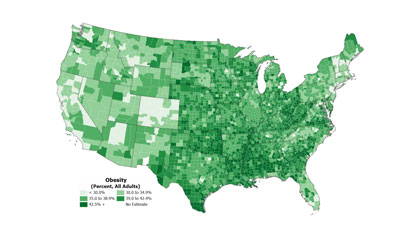
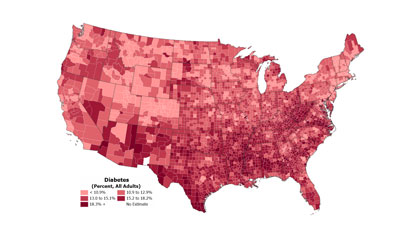
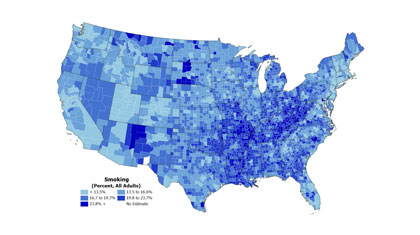
- Data fact sheets for each state and community-based heat maps for risk factors upon request.
To request technical assistance or learn more about any of the Center's activities, contact: CenterOfExcellence@alz.org.
Modifiable risk factors

Toolkit: Community Convenings for Dementia Risk Reduction
This toolkit provides a framework for public health agencies to host a community meeting about incorporating brain health into existing initiatives.
The science on dementia risk reduction is quickly evolving. The BOLD Center regularly monitors the evidence of multiple risk factors and their impact on brain health.
Science summaries on modifiable risk factors for dementia
The following PDFs are short summaries on the current state of the evidence on a variety of possible dementia risk factors, including the implications for public health:
- Compiled Report (PDF) — includes all summaries in this list
- Education and Cognitive Engagement (PDF)
- Traumatic Brain Injury (PDF)
- Hypertension (PDF)
- Diabetes and Obesity (PDF)
- Exercise (PDF)
- Smoking (PDF)
- Sleep (PDF)
- Diet and Nutrition (PDF)
- Social Engagement (PDF)
- Depression (PDF)
- Sensory Impairments (PDF)
- Alcohol (PDF)
Webinar series on modifiable risk factors for dementia
Videos from the BOLD Center outline the evidence behind various modifiable risk factors and what this means for public health. Continuing education credits for this webinar series are available for healthcare professionals. Click to learn more.
The Alzheimer's Association U.S. POINTER trial — a two-year, multidomain lifestyle intervention — improved cognition in older adults at risk of cognitive decline.
-
Read the top-line findings in the The Journal of the American Medical Association (JAMA): “Effects Of Structured vs Self-Guided Multidomain Lifestyle Interventions for Global Cognitive Function: The U.S. POINTER Randomized Clinical Trial.”
-
Explore the public health implications of these findings, starting with implementation science, in an article in Alzheimer’s & Dementia.
Prevalence of risk factors for dementia in the U.S.
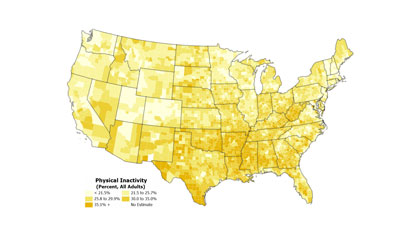
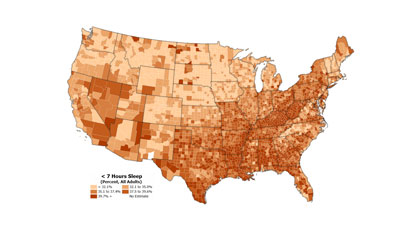
View the prevalence of risk factors for cognitive decline in the United States (PDF). Select a state from the dropdown below for state-level information. For county-level heat maps, either by state or census tract, please contact CenterOfExcellence@alz.org. Heat maps show the prevalence of six risk factors for cognitive decline and dementia: hypertension, obesity, diabetes, smoking, physical inactivity and poor sleep.
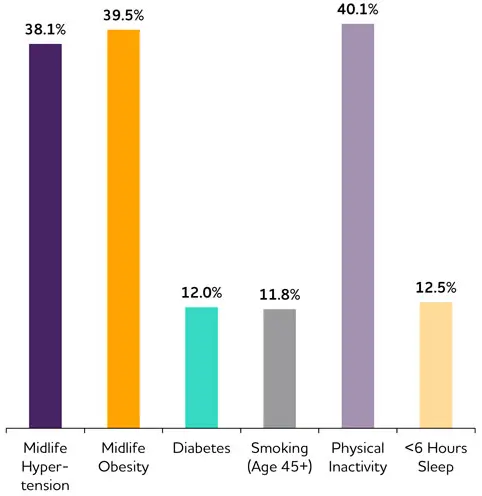
Risk factor prevalence maps

Social determinants of health (SDOH)
Toolkit: Social Determinants of Health
Created for public health agencies, this toolkit provides a framework for identifying and addressing dementia-related SDOH.
Social determinants of health (SDOH) — the conditions where people live, learn, work, play and age — affect a range of health risks and outcomes, including dementia risk, modifiable risk factors for dementia and a person's ability to address those risk factors.
Science summaries on SDOH and dementia
A series of short summaries developed by the BOLD Center detail the current state of the evidence on a number of SDOH related to dementia:
-
Compiled Report (PDF) — includes all summaries in this list
-
Education (PDF)
-
Economics (PDF)
-
Food Insecurity (PDF)
-
Environment (PDF)
Webinar series on SDOH and dementia
The BOLD Center hosted a webinar series featuring public health experts discussing links between SDOH and dementia risk reduction, along with insights from state and local health departments.
Infographics on SDOH and dementia
The BOLD Center developed a set of infographics that showcase information on SDOH related to dementia as well as public health strategies to address these issues:
Quality education
Download the infographic (PDF)
Economic stability
Download the infographic (PDF)
Nutritious food
Download the infographic (PDF)
Social connections
Download the infographic (PDF)
Healthy environment
Download the infographic (PDF)
What public health can do
 Emerging research and practice from around the globe have illustrated successful strategies for addressing dementia risk factors and supporting public health in doing so. At AAIC 2023, the BOLD Center held a conversation with international researchers and organizations about the most effective ways to support public health in prioritizing brain health activities. Read a transcript of the conversation.
Build expertise in dementia risk reduction through Project ECHO
The Alzheimer’s and Dementia Care ECHO Program connects national experts in dementia with professionals in public health in a series of interactive, case-based video conferencing sessions. Project ECHO improves access to best-practice care and resources by building capacity within local communities. By supporting peer-to-peer collaboration, network building and mentoring, the ECHO model can build sustainable knowledge, skills and infrastructure across multiple sectors that require a multidisciplinary, holistic approach. Learn more about Project ECHO.
Include risk reduction in Alzheimer's plans
Addressing risk factors for cognitive decline and dementia should be included in state, local or Tribal Alzheimer's plans. Public health officials should be involved in a jurisdiction's comprehensive planning efforts. Suggested Recommendations for Alzheimer's Plans (PDF) provides examples of risk reduction-related recommendations that could be included in such plans. Our needs assessment tools can also help in the planning efforts.
Toolkit: Brain Health Public Awareness Campaigns
This toolkit provides a framework for public health agencies to develop brain health awareness campaigns.
Integrate messaging
The Brain Health Public Awareness Campaigns Toolkit (PDF) provides public health agencies with evidence-based strategies to frame messaging, address common barriers and offer insights into public perceptions of brain health. It is informed by the Public Health Research Roundtable hosted in partnership with Wake Forest University School of Medicine and summarized in the report Frameworks and Strategies for Driving Action on Dementia Risk Reduction Through Behavior Change (PDF).
Address hypertension
Some of the strongest evidence about reducing risk for cognitive decline involves managing hypertension. The Alzheimer's Association has prepared a fact sheet on hypertension and risk of dementia (PDF) specifically for public health officials.
To request technical assistance or learn more about any of the Center's activities, contact: CenterOfExcellence@alz.org.