
Sandwich Generation Caregivers
Are you a dementia caregiver who's part of the “sandwich generation”? This term describes adults who are caring for their aging parents and their own children at the same time.
They are squeezed — or sandwiched — between multiple caregiving needs, as well as the responsibilities of their own lives and jobs. If this sounds like you, you’re not alone: About 25% of dementia caregivers are part of the sandwich generation.
Who is the “sandwich generation”?
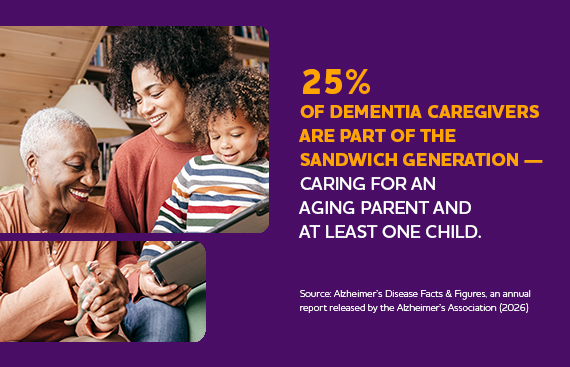 More than half of Americans in their 40s are part of the sandwich generation, with many in their 30s and 50s also providing care to both parents and children.
Living arrangements and caregiving dynamics vary from family to family, but being part of the sandwich generation can mean:
-
Living in a multigenerational household
-
Financially supporting an aging parent and young or adult children, and dealing with financial strain or stress
-
Working full time, or having to change work schedules based on caregiving needs
- Experiencing caregiver stress and burnout due to lack of time for yourself and managing many needs and logistics for your family
“Seeking support takes time, which is short in supply. However, my Alzheimer's Association support group meets on Zoom, which allows me to join during kid music lessons and tutoring sessions. If you reach out to others, you will quickly learn that you are not alone.”
Helping a parent navigate Alzheimer’s or another dementia
When your parent receives a diagnosis, it’s natural that your relationship with them will change. You might take on more responsibilities related to their care as well as helping them make legal and financial decisions.
Both you and your parent may feel uncertain about where to start, and you might have different opinions about the best steps to take. It’s normal to feel frustration, confusion, and a range of other emotions as new challenges arise. There can also be high emotions and disagreement among siblings and other family members. Find tips for resolving family conflicts.
If your other parent is involved in caregiving, it’s common to feel concern for them as they accept their spouse’s diagnosis and take on new responsibilities. Know that you’re not alone, and support is available. The Alzheimer’s Association offers resources for the whole family.
The Empowered Caregiver
This education series helps caregivers navigate the responsibilities of caring for someone living with dementia. View online programs or find an in-person program near you.Multigenerational caregiving
Hear from a mother-daughter caregiving team. Priscilla and Kaylin share how they communicate and support each other while caring for a loved one with dementia.
Resources to share with a parent who is living with dementia
- The “I Have Alzheimer’s” section of our website is designed specifically for people living with Alzheimer’s and other types of dementia. Topics include planning for the future, treatments and research, and living well.
- The My ALZ Journey mobile app offers personalized support for newly diagnosed people and their care partners.
Caregiving resources
When you become a caregiver for a parent living with dementia, there’s a lot of new information. You don’t have to learn everything at once and can return to our Caregiver Support resources whenever you need.

Communication and Alzheimer's

Resolving Family Conflicts

Safety

Choosing Care Providers

Planning for Care Costs

Planning Ahead for Legal Matters
Setting boundaries in a caregiving relationship
While there may be an assumption that you’ll care for your parent, it’s helpful to have an honest conversation about what that means. This includes considerations such as:
-
How much time will you spend on their care, balanced with caring for your child(ren) and yourself?
-
How much financial support will they need, and what’s realistic for you?
-
What are some important commitments or activities in your life that you can’t give up?
-
Who else can be involved in providing care?
You can’t do it all. Setting boundaries helps protect your own time and health while creating a realistic care plan for your parent.
Support for adult child caregivers
As you’re juggling care for your parent and child(ren), it’s also important to take care of yourself and your own health.
Call our free 24/7 Helpline (800.272.3900) any time. You’ll be connected with a live person who can provide information, local resources, crisis assistance and emotional support.
Learn about common challenges and find support:
- Caregiver Health: Find tips for maintaining your own health.
- Caregiver Stress: Learn the signs of stress and find resources to avoid burnout.
- Respite Care: Learn about services that give caregivers a temporary rest.
- Support Groups: Find a caregiver support group in your area.
- ALZConnected: Talk to other caregivers in this supportive online community.
Helping kids cope when a family member is living with dementia
Kids will respond in different ways when a grandparent is diagnosed with Alzheimer’s or another dementia. They may experience a range of emotions, including fear and confusion. Find age-appropriate resources to help children and teenagers understand what to expect and how to connect with the person they care about.