

Be a Part of the Fight to End Alzheimer's
Be a Part of the Fight to End Alzheimer's
The millions of people impacted by Alzheimer's disease need your help. Your generosity can help us provide care and support to those facing the challenges of Alzheimer's, protect brain health, and advance global research. Please make a gift today.
Donate NowALZBrainTrust
 Alzheimer's disease does not affect all communities equally, and neither does the research meant to fight it. Black/African Americans are twice as likely to be diagnosed yet account for only 1.2% of clinical trial participants. Hispanic/Latino individuals are about 1.5 times more likely to develop Alzheimer's than White Americans yet represent just 5.6%. ALZBrainTrust is an Alzheimer's Association initiative working to change that by partnering with communities to make dementia research more inclusive, accessible and trustworthy.
Our approach
ALZBrainTrust is working to make dementia research accessible in communities that have been left out for too long. Through regional hubs in Chicago, Los Angeles and Houston, the Alzheimer’s Association is building trust, fostering local partnerships and ensuring that clinical trials and research opportunities are accessible and responsive to the needs of underrepresented communities.
Here’s how ALZBrainTrust is doing it:
We are using a community-based participatory research (CBPR) model that centers community knowledge and experience. This approach helps us understand the systemic barriers to research participation in Black/African American and Hispanic/Latino communities.
Community First: ALZBrainTrust Engagement Guide
ALZBrainTrust is building a new model for dementia clinical research in which communities aren't just recruited but lead. Working through hubs in Chicago, Houston and Los Angeles, ALZBrainTrust brings together local chapter teams, academic researchers and trusted community partners to codesign strategies that increase awareness, build trust and expand participation in clinical studies among Black and Hispanic populations.
The Community First: ALZBrainTrust Engagement Guide explores the barriers communities face, the engagement models each hub is developing and a set of practice-based recommendations for strengthening research recruitment nationwide.
Among the guide's 10 recommendations:
- Embed recruitment within existing programs. Every outreach event should include a clear, actionable step toward research participation, whether that's an on-site sign-up form, a QR code linking to a study or staff available to screen for eligibility.
- Formalize a community ambassador model. Trusted community members, like faith leaders, caregivers and community health workers, can serve as ongoing referral partners when equipped with simple talking points, recruitment materials and feedback loops.
- Expand multilingual and culturally tailored materials. Auditing current materials and prioritizing translation into commonly spoken languages, combined with messaging adapted to reflect cultural values and communication styles, can significantly improve reach and comprehension.
Download the ALZBrainTrust Engagement Guide (PDF) to explore all 10 recommendations, the engagement models behind them and what communities across the country are teaching us about equity in research.
Help make dementia research more accessible
Representation matters in the fight against Alzheimer’s. Alzheimer’s affects people of all backgrounds, but too many voices are missing from the conversation. Find clinical trials that need participants like you and help advance research.
Local chapters and regional impact
Illinois chapter
The Alzheimer's Association Illinois chapter serves 87 counties across the state with a clear goal: show up, listen and build trust. Partnering with faith-based organizations and local leaders, the Illinois chapter is helping make Alzheimer’s research more relevant to families. Outreach is bilingual, engagement is personal and each conversation helps address health disparities that have excluded many people.
Community partners:
- Messiah Temple M.B. Church of Chicago
- RUSH Alzheimer’s Disease Center - Latino CORE
- Telpochcalli Community Education Project (Tcep)
- UC Healthy Aging & Alzheimer’s Research Care (HAARC) Center
- Priscilla Barnes, Ph.D., MPH
California Southland chapter
Los Angeles is vast, and so is the challenge. The Alzheimer's Association California Southland chapter is addressing health disparities by starting at the community level, having honest conversations, reducing stigma, and ensuring Black and Hispanic communities are included in dementia research. The focus is on connection. Listening sessions, outreach events and culturally relevant education ensure local voices are heard and influence the direction of research.
Community partners: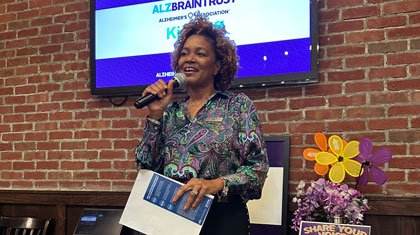
- Advocates for African American Elders (AAAE)
- Alpha Phi Alpha Fraternity Inc. Beta Psi Lambda Chapter
- Grand Park Foundation
- Grant African Methodist Episcopal (AME) Church
- South Bureau Ministerial Alliance
- Karen Lincoln, Ph.D., MSW, MA, FGSA
Houston and Southeast Texas chapter
The Alzheimer's Association Houston and Southeast Texas chapter is all about trust — because without it, research doesn’t work. This chapter is working closely with churches, research institutions and grassroots organizations to understand what’s keeping people from participating in clinical trials and getting the health care they deserve. Every step forward comes from authentic conversations with genuine people who know the struggles firsthand.
Community partners: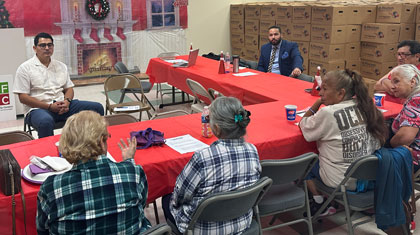
- Archdiocese of Galveston-Houston
- Community Family Centers (CFC)
- East End Communities Collaborative
- Wheeler Avenue Baptist Church
- Luis Medina, Ph.D.
Funders
- Eisai, Inc.
- The Dolby Family
- Tom and Diane Detelich
Contact us
We’re looking for passionate advocates, community leaders, health professionals and caregivers who want to help drive equity-focused change. If you’re interested in participating or have questions, please email us at ALZBrainTrust@alz.org.