
Double Your Impact Against Alzheimer’s
Double Your Impact Against Alzheimer’s
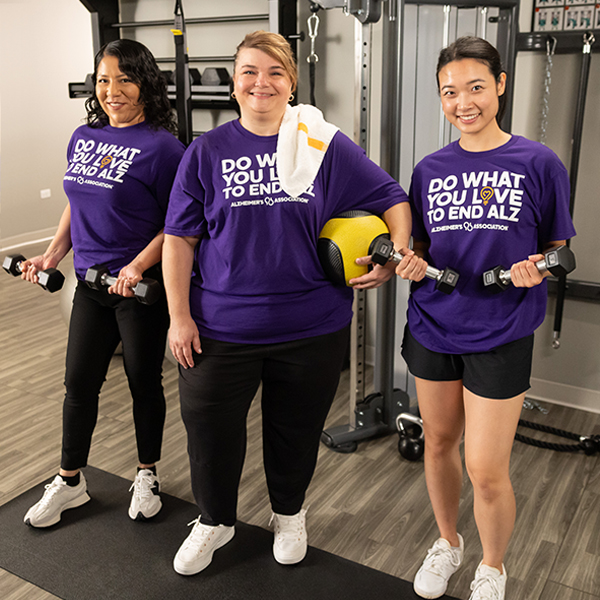
Your gift can be matched twice during our Do What You Love™ 2x Match Challenge — up to $35,000 — for 48 hours only. Make a gift that can double in impact by midnight, Oct. 16.
Donate NowAccelerating Research
As the world's largest nonprofit funder of Alzheimer's and dementia research, the Alzheimer's Association is committed to accelerating global progress toward new treatments, diagnostic tools, methods of prevention and, ultimately, a cure. This progress can only be realized by delivering solutions that will work for all populations, developed by empowering a representative and inclusive field of researchers and study participants.
Current disparities in Alzheimer's and other dementia — such as older Black Americans being twice as likely to have dementia as older Whites — will continue to expand without conscious intervention to understand and appropriately tailor approaches to support all communities. The following Association initiatives and partnerships, among many others, are critical steps in that effort.
Funding and Fostering Research
The Alzheimer's Association International Research Grant Program (IRGP) funds investigations to advance our understanding of Alzheimer's disease, identify new treatment strategies, improve care for people living with dementia, and further our knowledge of the brain and disease prevention. We are committed to promoting research in all communities, as well as addressing health challenges experienced by all communities through social determinants of health around Alzheimer's and other dementia. The Association is currently funding over 1,150 projects in 57 countries, totaling $430 million in active and committed funding.
The Association recognizes the importance of supporting research through grant funding to understand and address social determinants of health in Alzheimer's and other dementia. The Supporting Research in Health Disparities, Policy and Ethics in Alzheimer's Disease and Dementia Research (HPE-ADRD) program aims to provide seed or synergistic funding for research with the potential to increase knowledge about Alzheimer's and all other dementia in populations that have historically not participated in research studies.
The Capacity Building in International Dementia Research (CBIDR) grant, a collaborative initiative between the Association and the Global Brain Health Institute (GBHI), funds projects that showcase innovative strategies for enhancing research capacity and promise to advance dementia research. The CBIDR grant targets capacity building for scientific investigation in low- and middle-income countries (LMICs) where significant barriers to sustainability — including limited funding, infrastructure and personnel — persist.
Empowering Researchers
The Association works to support and advance the careers of researchers from all backgrounds working in all areas of the dementia research field. The International Society to Advance Alzheimer's Research and Treatment (ISTAART) is the Association's professional society. ISTAART is a diverse global network of more than 13,000 scientists, clinicians and professionals in 120 countries who share common goals. Membership discounts are available for postdoctoral researchers and free membership is offered to all students and individuals from LMICs.
ISTAART hosts a Diversity and Disparities Professional Interest Area (PIA) which focuses on identifying potential differences in risk reduction strategies, diagnosis and treatment effectiveness in individuals of diverse backgrounds on a global scale. A major emphasis is placed on underlying cultural and cognitive differences and brain mechanisms. The PIA also explores culturally responsbile strategies for dementia risk reduction in these populations and hosts Special Interest Groups focused on bilingualism, literacy and language, LGBTQ+ communities and dementia research in LMICs.
The ISTAART Ambassador Program provides early career researchers with year-round professional development and networking opportunities. Through this program, ambassadors gain exclusive access to the Association's suite of scientific conferences and receive personalized mentoring and career-development training, ensuring they are equipped with the skills and knowledge to advance in this field. In 2024, 39 ambassadors were selected representing 24 different countries, 13 of whom represented LMICs.
Convening Global Perspectives
Bringing researchers together from all corners of the world is essential for collaboration and advancing dementia research. Registration rates for all Association scientific conferences are adjusted based on country classifications by income level. The Association also provides opportunities for researchers to apply for travel fellowships to support their registration, travel and housing to many Association-led scientific conferences.
The Alzheimer's Association International Conference® (AAIC®) is the largest global forum for sharing groundbreaking dementia research, marking year-over-year progress of the research that will shape the future of diagnosis, treatment, prevention and care. In 2024, more than 14,400 researchers from 84 countries attended the conference in person and online, sharing more than 4,500 posters and 750 podium presentations on basic science and pathogenesis, biomarkers, clinical manifestations, drug development, public health, dementia care and more.
AAIC® Advancements: Exploring Equity in Diagnosis brought together leading experts in biomarkers, epidemiology, health equity, community participatory research practices, clinical care and more to advance discussion of the science and collaboration around identifying, understanding and addressing equity in Alzheimer's and other dementia diagnosis. Funding for this conference was made possible in part by a grant from the National Institute on Aging.
The Association hosted the fourth Latinos & Alzheimer's Symposium in 2024, which explored challenges in recruitment of Latinos into clinical studies as well as explored dementia risk, early detection and care in Latino populations. The incidence of dementia in the Latino population is one and a half times that of the White population.
The Association launched an open access, peer-reviewed academic journal in 2024 as part of the Alzheimer's & Dementia® journal family. Alzheimer's & Dementia: Behavior & Socioeconomics of Aging examines how economic, social and behavioral factors impact and inform health policy, interventions and strategies of dementia care and health outcomes in aging.
Making Research Accessible
As part of AAIC 2024, the Association introduced AAIC For All, a no-cost, half-day event designed to promote accessibility for individuals who couldn’t attend the main conference due to time or resources. AAIC For All offered two tracks, both available in person and online: one for the general public and another for clinicians and health care providers. As part of the general public track, experts in the field presented cutting-edge research in an easy-to-understand format.
The Alzheimer's Association Research Champions program trains over 40 staff members in communities nationwide to speak competently and passionately about dementia science and the Association’s global leadership role in research. Bilingual champions hosted 42 presentations in 2024, including 32 in Spanish and another 10 in Chinese, ensuring that research information is accessible to the broadest swath of Americans.
Alzheimer's Association TrialMatch® is a free clinical studies matching service that connects individuals living with cognitive impairment, Alzheimer’s or another dementia; caregivers; and healthy participants with current research studies. The continuously updated database of Alzheimer’s and dementia clinical studies includes hundreds of pharmacological (drug) and non-pharmacological (non-drug) studies being conducted at sites across the country and globally, and sees over 3,000 users per month. Community outreach is a critical element in research trial recruitment through TrialMatch, ensuring that results effectively represent and respond to the experiences and needs of all individuals impacted by dementia, leading to better detection, diagnosis and treatment options.
Partnership Spotlight
Alzheimer's Association Research Conversations Presentation
Research Conversations presentations aim to increase awareness and promote dementia clinical trials in underrepresented communities, specifically Black/African American and Hispanic/Latino populations. This new initiative was developed by the Alzheimer's Association and DEI Council. The National Caucus Center on Black Aging (NCBA), the National Indian Council on Aging, Inc. (NICOA), the National Asian Pacific Center on Aging (NAPCA) and the National Hispanic Council on Aging (NHCOA) provided input to help shape the inaugural presentation knowing the needs of their respective populations who are underrepresented in research.
"NCBA appreciates the opportunity to help low-income older adults improve their health by becoming more educated on how to address brain health," said Angie Boddie, NCBA director of Health Programs. Alzheimer's Association Health Equity Champions, which include local and national DEI partners and Association volunteers, have been equipped with resources to help them accurately and consistently deploy the Research Conversations presentation.